

I completed 20 years on Daily Nocturnal Hemodialysis!
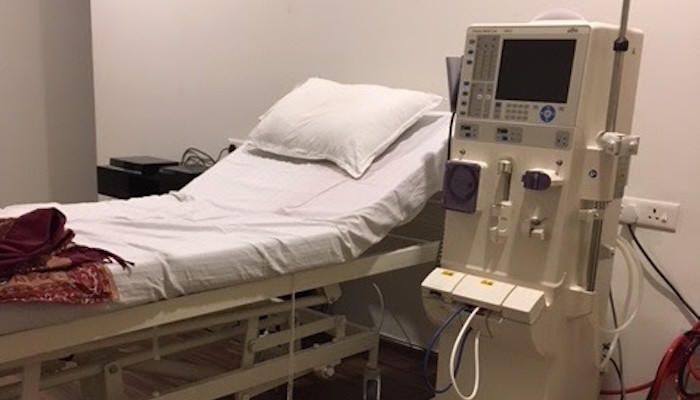
Reprinted with permission from https://www.kamaldshah.com/2026/05/i-completed-20-years-on-daily-nocturnal.html. Originally published on May 15, 2026.
I just completed 20 years on daily nocturnal hemodialysis at home. What a journey it has been! I am pretty certain I am alive today thanks only to this modality. When I switched to this therapy in 2006, very few were doing hemodialysis at home. And those that were, were doing conventional hemodialysis - twice or thrice a week, 4 hours each time. I did not know anyone else who was doing more frequent, nocturnal treatments. So, it was quite scary for me to make the switch.
I wrote about the entire experience in an article for American Journal of Kidney Diseases here.
Despite two decades having gone by on this therapy, I don't see too many people in the developing world opt for this therapy. In the developed world, there has recently been a sharp increase in people opting for it. The US has seen a 60% increase in home HD patients recently, primarily due to the government's push for this modality.
One big difference in those countries is the availability of machines designed for home use. Hemodialysis machines can be onerous to use. Blood coming out of the body is scary enough. When you have machines that are intimidating and difficult to operate, it is even more scary.
I used the NxStage System One during my month-long trip to the US in 2024. It was such a breeze compared to the large machines we have in India.
Why are these machines not available in India and much of the developing world? Affordability. How many people can afford to buy the machine? The consumables required for each treatment are also specific to each machine and come as a cartridge. This cartridge is also much more expensive than consumables used in conventional machines. All this makes the therapy out of reach for a majority of patients in developing countries. The number of patients that can afford this is minuscule which does not make it worthwhile for these companies to come to countries like India.
Will things ever change? Not in the current shape. However, if innovation causes more such machines to be developed and manufactured, this could cause the pricing to become more rational and then, there could be hope that these machines would come to countries like ours.
Till then, the numbers are likely to be very small. I wrote about this when I completed ten years on home hemodialysis. Today, after another ten years have gone by, I know of only one other patient in India who gets more frequent, nocturnal treatments and two patients who get more frequent, short treatments. I really wish more people got the benefit of more hours on the machine. The trouble is the whole idea is so counter-intuitive! People generally feel fatigued and drained after a dialysis session. So, when you try and convince them that if you do more treatments, you will feel less fatigued, it just does not make sense!
It just seems unfair that so many people would be deprived of better treatments just because of affordability! Well, who said the world was a fair place?
Comments
Kamal Shah
Jun 01, 2026 7:07 AM
I agree that this modality significantly enhances not only the duration but also the quality of life for patients, as you mentioned.
Thank you for your insightful comment.
Theodôr Vogels
May 26, 2026 9:15 AM
Congrats on your 2 decades of Nocturnal HHD and that is both an achievement of your sustained motivation and as you stated and probably the return on investment is prolonging your life e.g. QoL. Personally I am a huge fan of any home dialysis treatment, both PD and HHD and we have had several patients on Nocturnal in our own dialysis program over the years, starting in 2001. We even had patients performing their dialysis "solo". Some patients even put their transplant status on hold because they felt that good on this modality that they felt they didn't want to expose themselves to the risks of a transplant ( not my advice however). Alass it never made to become wide spread e.g. the "standard" for patients. Unfortunately our HHD program in the Netherlands is decreasing from almost 300 pts to half of that last year. Mainly due to lack of nursing staff and reimbursements which are too low to cover assisted HHD.
In 2020 our Dutch NKF established a dedicated multidisciplinary Task Force on Home Dialysis in conjunction with the Dutch Kidney Patient Association and professionals to identify blockages and possible areas to improve the popularity but for now we could't make big steps. Although we educate every ESRD patient on the pro's and con's of the modality we cannot make it more popular for now. But personal experiences like yours are in my opinion the best in advocating to increase Nocturnal & HHD rather than just us as professionals trying to reach out!
Cheers, Theodôr