

70 Years Since the First Kidney Transplant, Pig-to-human Option Gains Attention

The first successful kidney transplant involving twin brothers Richard and Robert Herrick in 1954 at Brigham and Women's Hospital opened the door to providing options for patients with kidney failure.
It would be nearly two decades before Congress would approve Medicare coverage for treating patients with end-stage kidney disease (ESRD), and clinicians have routinely voiced the opinion that a kidney transplant, particularly from living-related donors, offers the best outcomes.
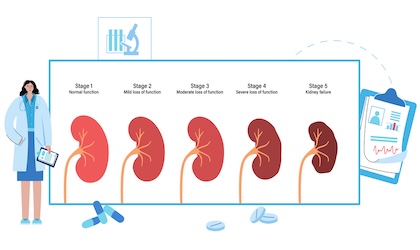
But the success of the procedure has been thwarted by a lack of supply. Over 90,000 people are on a waitlist in the United States for a new kidney despite gains in the number of organs donated by the public. In 2024, 27,759 kidney transplants were performed – only a 1.6% increase over 2023, according to the Organ Procurement and Transplantation Network.
We may still be years away from an artificial kidney or stem cell-based kidney regeneration process, but transplant specialists are now looking at another approach: xenotransplantation, where diseased human kidneys are replaced with gene-edited kidneys from pigs.

“At the end of the day, we need this,” transplant surgeon Jayme Locke, MD, MPH, FACS, FAST, said in an interview in May with Healio. “We have been doing human-to-human transplantation now for well over 60 years, and we don’t have enough organs. [Xenotransplantation] is a chance for end-stage kidney disease patients to live more normal lives, free from the chains of dialysis.”
Locke recently joined United Therapeutics as vice president of medical development for xenotransplantation. The company, along with eGenesis, has launched clinical trials this year using gene-edited pig kidneys.

The U.S. Food and Drug Administration (FDA) in March approved a trial directed by United Therapeutics and the company completed its first xenotransplant using its investigational UKidney in November. The EXPAND study will start with two centers completing 6 transplants, initiating follow-up among those patients, and continue the trials with the hopes of doing up to 50 pig-to-human transplants at additional transplant centers.
“This trial moves us closer to offering ESRD patients an alternative to lifelong dialysis, especially those who are unlikely to receive a kidney from a
human donor,” said Leigh Peterson, PhD, executive vice president of product development and xenotransplantation at United Therapeutics.
“The EXPAND study offers new hope to the thousands of Americans currently on the kidney transplant waiting list, many of whom may not survive long enough to receive a human organ,” said Robert Montgomery, MD, D.Phil., the H. Leon Pachter, MD Professor of Surgery, chair of the Department of Surgery at the NYU Grossman School of Medicine and director of the NYU Langone Transplant Institute.

The United Therapeutics trial is using pig kidneys with 10 gene edits. According to the company, six human genes are added to the pig genome to facilitate immunological acceptance and compatibility of the organ in the human recipient. Four porcine genes are inactivated or “knocked out” to reduce the risk of organ rejection and to moderate organ growth. Scientists inactivated porcine endogenous retroviruses in the pig donor to eliminate any risk of infection in humans, according to the company.
In the study, efficacy endpoints include participant survival rate, UKidney survival rate, change in measured glomerular filtration rate (GFR) and change in quality of life in participants at 24 weeks post-transplant.
Overall
survival time of participants receiving a UKidney and overall survival
time of the UKidneys themselves are also efficacy endpoints, according
to the company.  Researchers will also be looking at safety endpoints,
including the presence of proteinuria, zoonotic infections, and
opportunistic infections. The trial will focus on performing
transplants in older patients – criteria include an age of 55
to 70 years old, a diagnosis of ESRD, and at least six months on
hemodialysis.
Researchers will also be looking at safety endpoints,
including the presence of proteinuria, zoonotic infections, and
opportunistic infections. The trial will focus on performing
transplants in older patients – criteria include an age of 55
to 70 years old, a diagnosis of ESRD, and at least six months on
hemodialysis.
Participants must not need multiple organ transplants; must not have severe medical co-morbidities, including but not limited to advanced cardiovascular disease, severe peripheral vascular disease, severe neurological disease, chronic pulmonary disease, and uncontrolled diabetes; and must not have a history of medical noncompliance that may preclude adherence to the demands and requirements of xenotransplantation, according to the company.
Record set
In another trial, transplant specialists at Mass General Hospital removed a gene-edited pig kidney from Tim Andrews, 67, a retired engineer, after the kidney had functioned for a record 271 days. Andrews, of Concord, New Hampshire, had been on dialysis for more than two years before receiving the transplant in late January.
“As soon as I woke up after the surgery, the cloud of dialysis disappeared,” Andrews said in a statement. “I felt re-energized and revitalized. It was a miracle.
“But this transplant isn’t about me,” he said. “It’s about all the people who I met at the dialysis clinic, and I saw what they were going through. There are more than 500,000 people on dialysis, and I want to inspire them to never give up hope because that’s what this transplant provides. It’s a glimmer of hope,” Andrews said.
The donor kidney, EGEN-2784, is eGenesis’ lead candidate for kidney transplantation that carries three classes of genetic modifications designed to improve compatibility and support long-term function in human recipients. The modifications include:
Elimination of three glycan antigens to prevent hyperacute immune rejection
Insertion of seven human transgenes to regulate immune response, reduce inflammation, improve coagulation compatibility and regulate complement activation; and
Inactivation of endogenous retroviruses within the porcine genome to enhance safety.
“This procedure is more than a scientific milestone – it represents a new frontier in medicine,” said Michael Curtis, PhD, chief executive officer of eGenesis. “We stand at the beginning of a future where organ shortages may no longer dictate patient outcomes.”
Andrews received an immunosuppression regimen that included tegoprubart, an investigational monoclonal antibody designed to target the co-stimulatory CD40L pathway, the company said. “Significant prior research indicates that targeting the CD40L pathway has the potential for better efficacy and improved safety, including reduced risk of side effects, compared to current immunosuppressive drugs,” the company said.
References
Chase B. Massachusetts General Hospital performs second groundbreaking xenotransplant of genetically edited pig kidney into living recipient. Published Feb. 7, 2025. https://www.mghxenotransplant.org.
Organ transplants exceeded 48,000 in 2024; a 3.3% increase from the transplants performed in 2023. Organ Procurement and Transplantation Network. Published Jan. 15, 2025. https://optn.transplant.hrsa.gov/news/organ-transplants-exceeded-48-000-in-2024-a-33-percent-increase-from-the-transplants-performed-in-2023/
Rollet J. Q&A: Surgeon predicts kidney xenotransplantation will be ‘widely available’ in next decade. Healio. Published May 9, 2025. https://www.healio.com/news/nephrology/20250509/qa-surgeon-predicts-kidney-xenotransplantation-will-be-widely-available-in-next-decade
Comments